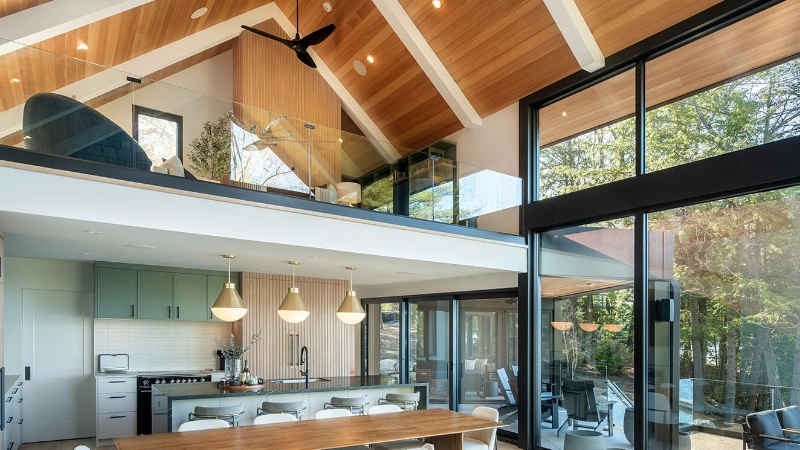
One of the first design conversations we have with clients is about ceiling heights.
Many people walk into our studio asking for 10-foot, 11-foot, or even 12- and 14-foot ceilings throughout their home. While taller ceilings can certainly create a sense of grandeur, our answer is often a little more nuanced.
At SMPL Design Studio, we don’t believe every room needs to be tall. We believe every room needs to feel right.
Great Design Is About Contrast
One of the principles that has influenced architecture for generations comes from Frank Lloyd Wright.
Rather than creating one large volume throughout an entire home, Wright used a concept of compression and release. As you move through the house, spaces intentionally transition from more intimate, lower ceilings into larger, more expansive rooms.
That contrast creates an emotional experience.
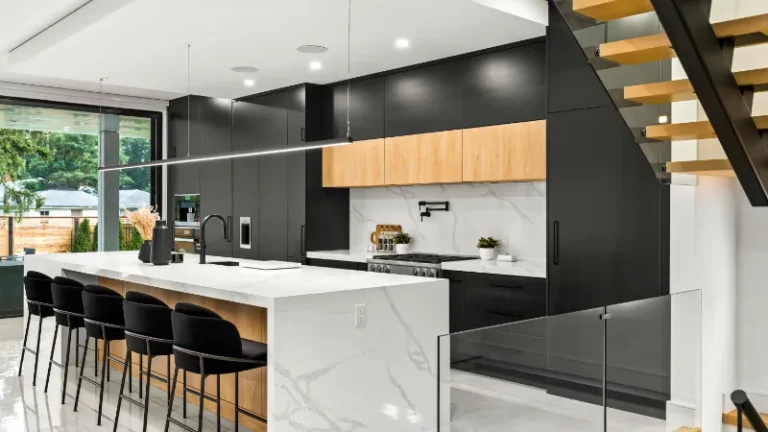
A space with a 12-foot ceiling feels even more dramatic when you’ve just walked through a foyer or hallway with a lower ceiling. Without that variation, even the tallest ceilings can begin to feel ordinary.
It’s not simply about height—it’s about how the space unfolds.
Designing for Human Scale
One of our roles as home designers is helping clients understand that bigger isn’t always better.
In many cases, we’ll recommend lowering ceiling heights in certain areas to create spaces that feel warm, comfortable, and connected to the people living in them.
Human scale is an important part of great residential design and architecture. The goal isn’t to make every room feel monumental—it’s to make every room feel intentional.
When ceiling heights vary throughout a home, each space develops its own character and purpose.
Ceiling Height Has a Real Impact on Your Budget
Beyond aesthetics, ceiling height also has a significant impact on construction costs.
As ceilings become taller, the home typically requires:
- Larger expanses of glass
- More exterior cladding and interior finishes
- Increased heating and cooling capacity
- Additional framing and structural considerations
- Higher overall construction costs
These factors can have a meaningful effect on the total project budget.
That’s why ceiling height isn’t simply a design decision—it’s also a financial one.
Finding the Right Balance
There is no universally “correct” ceiling height.
The right solution depends on the structure, the scale of the home, the lifestyle of the homeowner, and the experience you’re trying to create within each space.
Our job is to guide clients through those decisions by helping them understand not only how a room will look, but how it will feel to live in every day.
Thoughtful Design Creates Better Homes
At SMPL Design Studio, every design decision has a purpose.
Rather than chasing trends or maximizing dimensions for the sake of it, we focus on creating homes that are balanced, timeless, and comfortable. Ceiling heights are just one example of how thoughtful design decisions can dramatically influence the way a home is experienced.
If you’re planning a custom home and want to better understand how these design choices affect both the experience of your home and your overall investment, we’d love to have that conversation.
Contact SMPL Design Studio to learn how thoughtful design can transform the way you live.